Standing at the bowser wondering if paying extra for 98 actually does anything? Here's the short version.
Most cars on Australian roads are built to run on 91 (regular unleaded) or E10, and that's genuinely all they need — check your fuel filler flap or owner's manual, and if it says "minimum 91 RON", higher grades won't make the engine perform better, they'll just cost more per litre.
95 and 98 (premium unleaded) are for cars whose manufacturer specifically requires a higher octane rating — usually turbocharged, high-performance or European engines. Using premium in these cars protects against engine knock and is often required to hit the performance and fuel-economy figures the manufacturer advertises. Putting 91 in a car that requires 95+ isn't just wasteful, it can trigger the engine's knock sensor to pull timing back, costing you power and, over time, engine wear.
E10 is regular unleaded blended with up to 10% ethanol, and it's approved for the vast majority of petrol cars built after the early 2000s — it's usually a few cents cheaper per litre than 91 with no real-world difference for compatible engines. A small number of older or specialty vehicles aren't E10-compatible, so it's worth a quick manual check if your car's more than 20 years old.
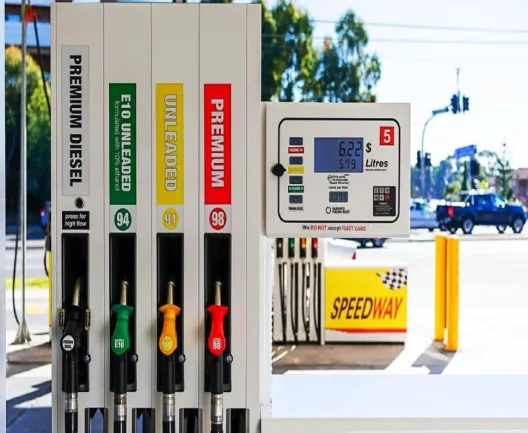
The simple rule: use whatever your manufacturer lists as the minimum requirement, not whatever feels premium. Every Speedway carries the full 91, 95, 98, E10 and Diesel range, so you're never stuck choosing between what your car needs and what's in the bowser.